Limited Time Sale: demand is high and stock is moving fast - 50% OFF TODAY ONLY
A Physiotherapist Tries The 3,000-Year-Old Japanese "Butterfly Method" - And Wakes Up Without Neck Pain For The First Time In Four Years
I spend my days straightening other people's necks. For four years I couldn't fix my own. Then a retired sleep researcher in Kyoto showed me something that embarrassed everything on my clinic shelf.
By James K., physiotherapist, as told to the Numa Sleep Desk
Updated August 2026

Four Years In A Cycle I Couldn't Break
There's a special embarrassment in treating neck pain for a living while hiding your own.
Every morning followed the same script. Wake at 6. Test the neck before moving it - a habit you develop when turning your head wrong can cost you the whole day. Hot shower on the left shoulder. Two ibuprofen with breakfast. Then eight hours of telling patients to fix the things I couldn't fix in myself.
I knew exactly what was wrong. My neck spent every night bent out of line, and every day my muscles paid the bill. Knowing it didn't help. That's the humbling part.
I Tried Every Device In The Catalogue
Being in the industry, I had access to everything - trade prices, samples, the lot:
❌ The adjustable air pillow - lost pressure by 3am, so I woke on a slowly deflating promise
❌ The cervical roll - held my neck in one 'correct' position so rigidly that I woke with new pain in new places
❌ The memory-foam brick - the dense slab that never quite recovered its shape after the first month
❌ Stacking two soft pillows - perfect alignment for the first twenty minutes, chaos by midnight
Then A Conference In Kyoto Changed Everything
Last spring I attended a sleep-medicine conference in Kyoto. At dinner I ended up beside Dr. Aiko Tanaka, a retired sleep researcher who had spent thirty years studying how people slept before modern pillows existed.
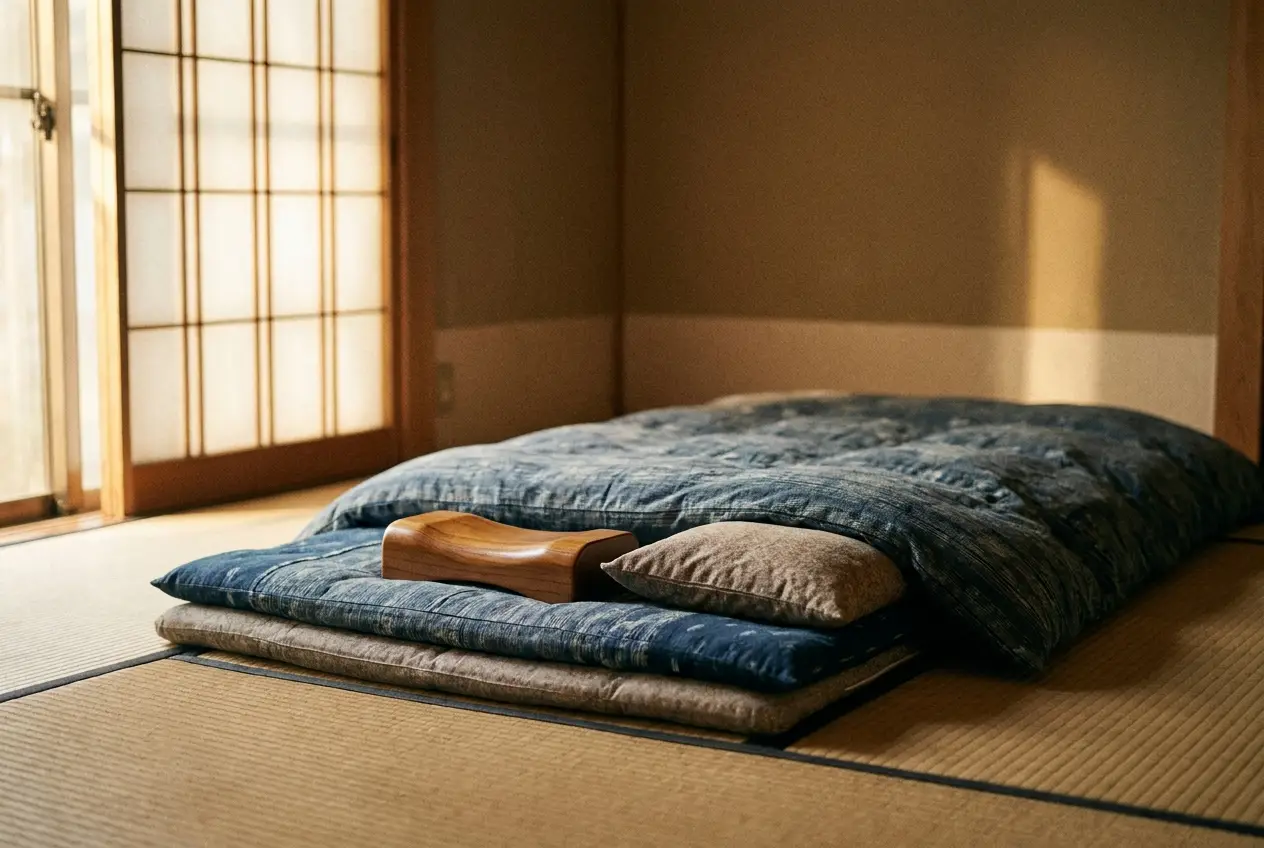
She told me something that stuck: traditional Japanese sleep culture treated the night as active posture, not passive collapse. The old wooden and buckwheat makura weren't about softness at all. They held the head at a fixed height so the neck stayed level with the spine - and side sleepers were taught to rest with the arms anchored forward and the shoulders supported, a position her grandmother called the butterfly, for the shape the body makes.
"Your patients strengthen their necks for one hour a day," she said, "and then bend them in half for eight hours a night. You cannot exercise your way out of a bad night posture."
I had no answer to that.
The Modern Version Of The Butterfly
Dr. Tanaka wasn't sentimental about the old tools - a wooden block is a hard night. Her point was the geometry: head held level, shoulders given somewhere to go, arms anchored so the body stops fidgeting for position.
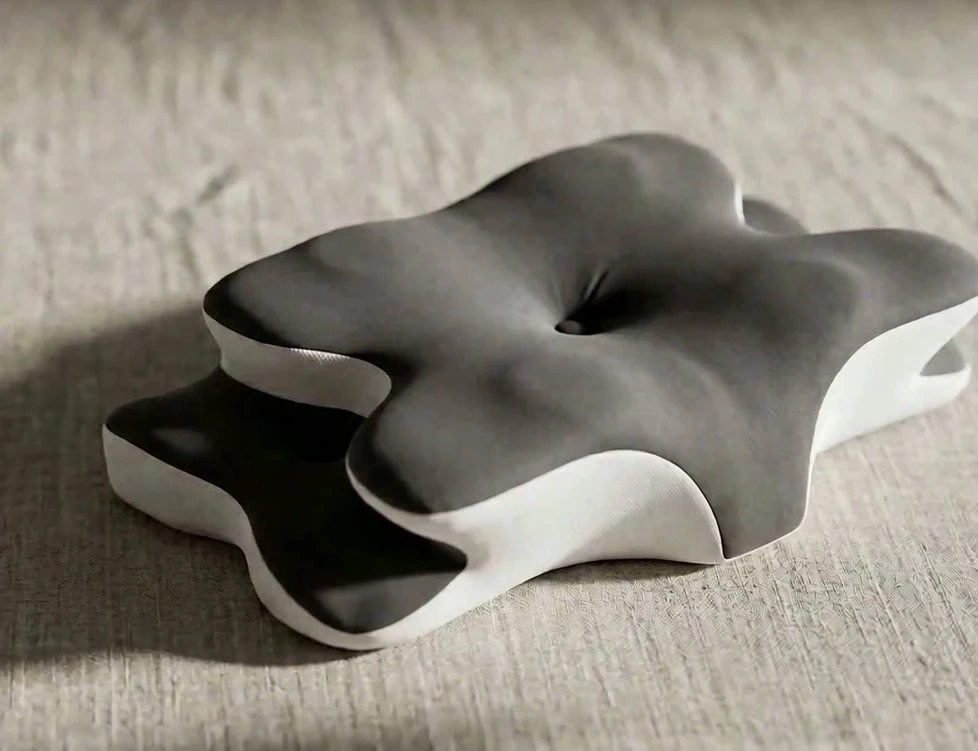
Then she said several of her former colleagues now recommend a modern pillow built on exactly that geometry - a contoured memory-foam design shaped, fittingly, like a butterfly. Raised wings where the arms anchor. A higher side contour that bridges the gap between shoulder and ear. A cradle that keeps the head from rolling.
It's called the Numa Pillow. I ordered one from my hotel room that night.
The First Night Told Me Everything
It arrived the week I got home. First impression: firmer than it looks. The foam pushes back slowly instead of swallowing your head.
I lay on my side, slotted my shoulder under the wing, and noticed something immediately - my arms had a place to be. That sounds small. It isn't. Half of night-time fidgeting is your arms hunting for a home.
I woke once, briefly, around five. Then it was morning, and I did my usual careful test-turn before lifting my head.
Nothing. No warning twinge. No script.
I actually laughed. Four years of morning protocol, and the first thing that broke the cycle was a slab of shaped foam.
What The Butterfly Shape Actually Does
Professional hat back on for a moment, because the mechanics matter more than my morning did:
✅ The wings anchor your arms and shoulders - the body stops hunting for a position, so you stop breaking your own alignment at 2am
✅ The 14cm side contour bridges the shoulder gap - the exact distance a flat pillow leaves your neck to sag
✅ The centre cradle stops the head rolling - the slow overnight drift that bends your neck out of line
✅ Two heights, one pillow - flip it: higher contour for side sleeping, lower for back sleeping
✅ Slow-rebound memory foam - holds the geometry for the whole night instead of flattening by 3am
Why Alignment Beats Accommodation
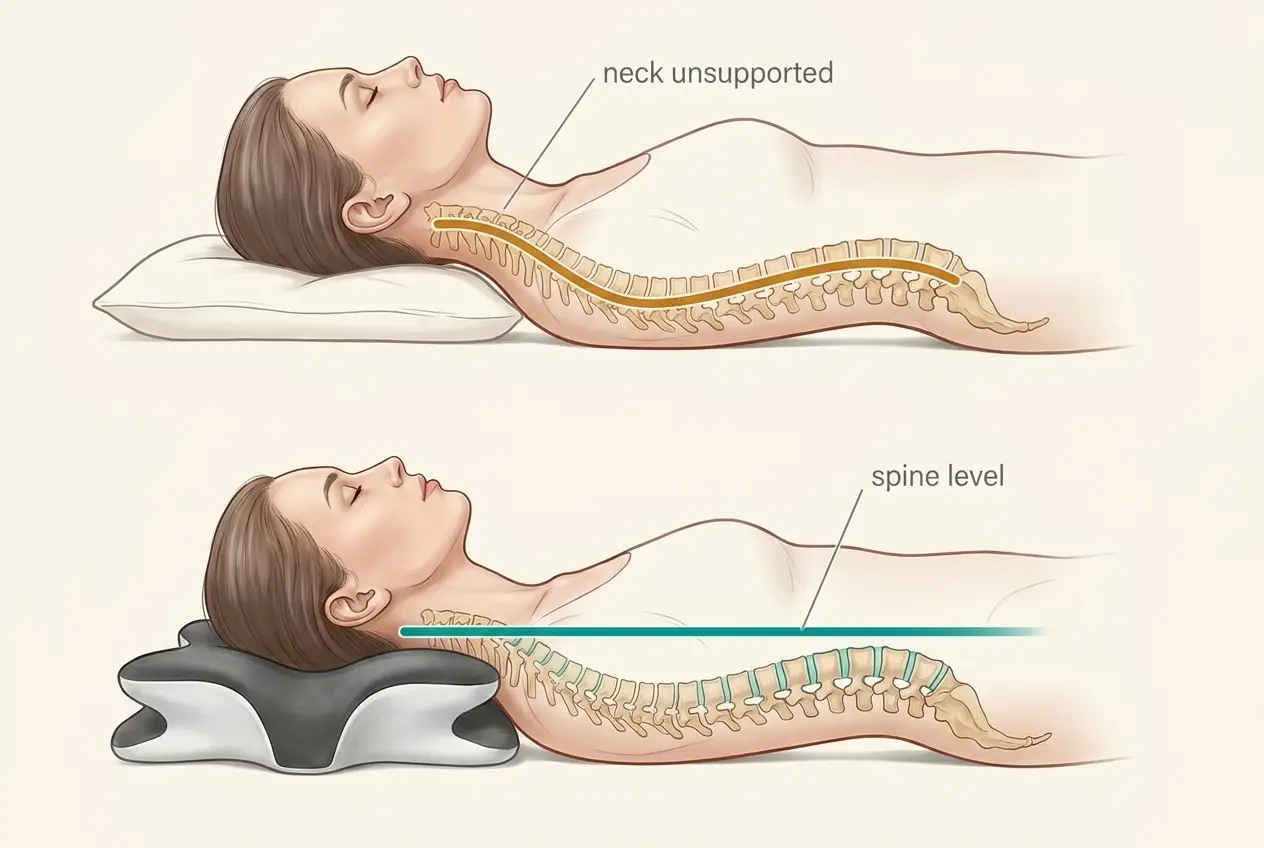
Most pillows accommodate whatever posture you land in - that's what "plush" means. A contoured pillow does the opposite: it makes the aligned position the comfortable one, so your body chooses it all night without being told.
Three things follow from that. Muscles that spend the night at their natural length wake up without the guarding tension that reads as stiffness. A supported body changes position less, so sleep runs deeper with fewer wakings. And unlike my cervical roll, the correction isn't rigid - the foam allows movement, it just makes the level position the path of least resistance.
That's the whole trick the makura was doing three thousand years ago. Foam just made it comfortable.
Then I Read The Reviews
When I got past my own results, I did what I tell patients to do with any product: read the public reviews - all of them, not the highlights. There are more than 3,800, and the pattern is hard to argue with. 93% of sleepers report waking with less neck pain. The ones that sounded most like my own file drawer:
From verified Numa reviews:
Massage every fortnight for two years just to function. Down to once a month now and my therapist says my neck feels like a different person's. Do the math on what this pillow saves me annually.
Peter N., Verified buyer
Ten years of desk work ruined my neck. This is the first thing that's actually moved the needle, physio exercises included honestly.
Corey T., Verified buyer
Headaches every single morning for months. Doctor said neck tension, look at how you sleep. Two weeks on this and the morning headaches have mostly stopped.
Tasha J., Verified buyer

What It Costs Next To The Alternatives
Clinic-grade cervical pillows sell for $200 and up at medical suppliers - I know, because I used to stock them. A single sports massage runs $70, and neck pain doesn't stop at one.
The Numa Pillow is $59.99 today - 50% off its $119.98 list price - with a 30-night sleep trial. Sleep on it every night for a month; if your mornings haven't changed, send it back and they refund every penny.
As someone who spent four years buying pricier things that didn't work: the trial is the part I'd have paid for.
My Honest Bottom Line
I still prescribe exercises. I still tell patients to take screen breaks. None of that has changed.
What's changed is the first question I ask anyone with morning neck pain: "What is your neck doing for the eight hours you're not in this room?"
Dr. Tanaka was right. You can't exercise your way out of a bad night posture. You can only fix the posture - and this is the first tool I've found that does it while you sleep.
50% Off Today Only
The Numa Pillow is $59.99 today (list $119.98), with a 30-night sleep trial - sleep on it for a month, and if your mornings haven't changed, send it back for a full refund.
Worst case: you get your money back. Best case: you stop testing your neck before you dare to move it.